
Is Singapore Property a Good Hedge Against Inflation?
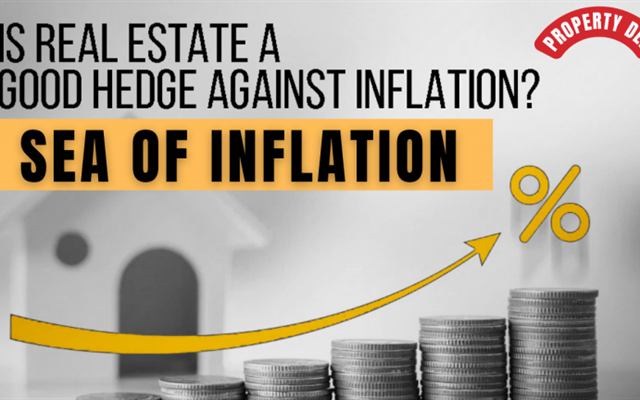
Is Singapore Property a Good Hedge Against Inflation?
================================
Table of Content
- Singapore Property: Hedge Against Inflation?
- Singapore Economy Overview
- Key Factors Pushing Up Prices
=================================
📌 Is Singapore Property a Good Hedge Against Inflation?
We have been seeing inflation everywhere lately. Is now the time to put our money into Singapore’s real estate market? Is Singapore property a good hedge against inflation?
With the gloomy outlook in the global markets, investors should exercise prudence, especially if they are buying purely as short term investment (e.g., hold less than 5 years).
For those who are buying their first property to stay or has a longer term perspective, it is always sound to invest in a home of your own without the worry for escalating rents.
During times of rising prices, real estate is always a good hedge against inflation. Real estate prices and inflation index are highly co-related. When inflation sets in, property value and rents will rise in tandem.
📌Singapore Economy Overview
Singapore is facing a difficult year in which economic growth will slow while inflation remains high.
MAS has tightened monetary policy 5 times to support a stronger Singapore dollar and at the same time try to stop imported inflation. Economists are forecasting that the central bank will further tighten monetary policy as high core inflation is expected to continue into 2023.
Economic growth may slow further in 2023 as pent-up demand from the reopening of economies slows down and external demand for Singapore’s products fades. While Singapore does not face a direct threat of recession, it will be deeply affected in the US and EU goes into a prolonged downturn in their economies.
📌 Key Factors Pushing Up Prices
The Monetary Authority of Singapore (MAS) and the Ministry of Trade and Industry (MTI) maintained their full-year expectations for headline inflation at 6% and core inflation at 4%.
- The increase in core inflation was due to escalating prices for food, services and retail.
- MAS and MTI expect labour costs to rise in the short term. Utilities are likely to remain high.
- Economists from Maybank stated that increases in wage prices will push companies to pass on these extra costs to customers, which will lead to workers demanding higher pay. This might intensify in the coming months as the Progressive Wage Model is expanded to cover extra costs of living.
- Returning expatriates are also expected to push up accommodation costs.
- Delays in property completion and property seller going through the 15-month HDB wait-out period also affects rental prices. Accommodation inflation also picked up alongside a faster pace of increase in housing rents, hitting 4.9% in September.
- Car and accommodation cost increases are also anticipated to stay firm amid tight COE (certificate of entitlement) quotas for cars and strong demand for rental housing.
Singapore has limited land and continue to attract affluent foreigners to our country because of our resilient economy and well-managed responses to the Covid pandemic. If the population keeps growing, this will push up property prices in the long term, especially private properties
Like this “Is Singapore Property a Good Hedge Against Inflation”Article?
See more articles (videos) here
Get an instant price estimate from real HDB transactions, then sell for a fixed $1,999 + GST.
 Why I Started Homeseller, And Why The Fee Is Still $1,999
 Clifford Centre Is Becoming The Clifford: What Changes In The CBD
 Why these Cooling Measures (Sept 2022) will not Work?